

When SaaS Sprawl Overwhelmed the Security Team
How the University of Cincinnati regained visibility and control across a fast-growing SaaS infrastructure
Data & Analytics
Workflow Usage in Practice
IT Direction
CISO
CIO
Core Problem
The Security team had witnessed a rapid influx of SaaS applications across departments, but lacked the foundational architecture to quickly align with teams or assess the security status of each application. As security standards were applied piecemeal, the team could not identify or address emerging threats in time.
Key Challenges
- Decentralized and fragmented security tools across multiple business units
- Inconsistent patching and software updates led to widespread vulnerabilities
- Lack of visibility into comprehensive inventory of assets led to unmonitored areas
- Manual processes resulted in inconsistent response to security threats
Requirements
- A single source of truth for all infrastructure and IT environments
- Real-time security intelligence across all systems with automated alerts
- Streamlined way to address patching and software lifecycle management
- A predictive framework for control processes to preemptively mitigate risks
Background & Intent
- The University of Cincinnati operates with a distributed technology environment with 100,000+ users, students, faculty, and staff.
- SaaS solutions deployed across various departments, creating siloed operational environments.
- This growth had resulted in widely varied security protocols and compliance standards across their operations.
Breakdown Analysis
- There was no unified monitoring system for their vast infrastructure.
- Configuration drift caused frequent breaches, as unpatched systems remained vulnerable.
- Relying on static integrations, reacting manually to threats, created significant security windows.
Automation Failures
- Analysts had to manually investigate alerts and rebuild workflows to make sense of the data.
- Teams performed one-off audits to regain control, revealing deeper systemic gaps.
- Human coordination became the only reliable way to validate permissions and compliance posture.
System Adaptation
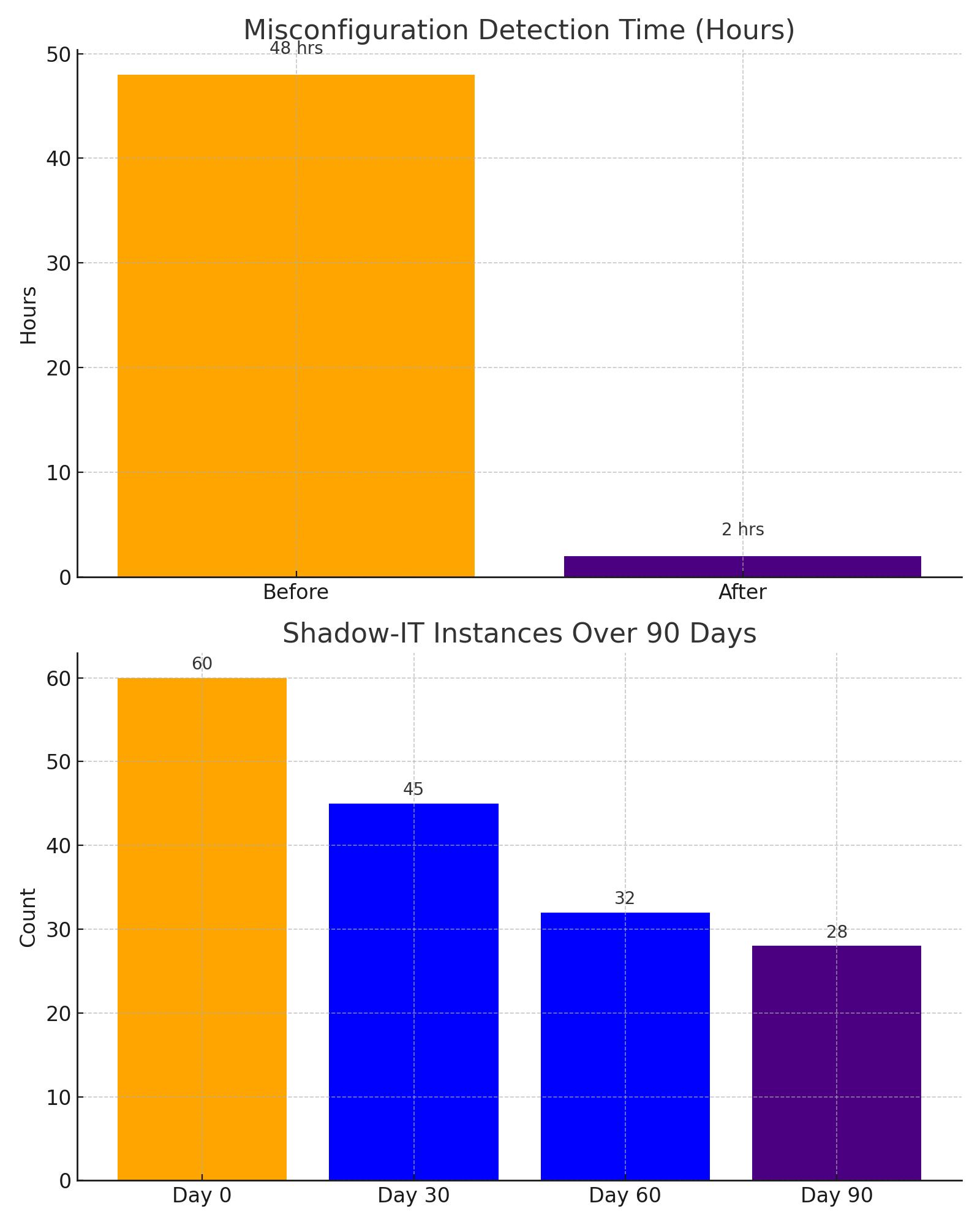
- AppOmni was implemented to provide unified visibility into SaaS configurations and user permissions.
- Real-time misconfiguration alerts were fed into the SIEM with contextual tags.
- Security, IT, and engineering created a shared workflow using a central dashboard.
- Automated checks were established for compliance frameworks and high-risk permission changes.
Resolution & Remaining Risks
- The approach: Automated data/infrastructure solutions into three focus categories.
- Deployed a unified configuration workflow, reducing disparate systems.
- Ongoing data analytics as a team, SAAS platform of advanced operational integrations.
- Continuous oversight via machine learning for operational system.
Key Takeaways
- Visibility is the foundation of SaaS security; without it, risk compounds silently.
- Automation only works when alerts carry context and fit real workflows.
- Governance must scale with SaaS growth, not lag behind it.
- Cross-team alignment is as critical as tooling in maintaining posture.
Role-Level Impact
Closing Takeaway
This case shows that SaaS speed can outpace security faster than teams expect, and that real trust comes from visibility and coordinated human oversight — not assumptions built into the tools.
Trending Agentic AI resources
Data & Analytics
Palantir: U.S. Army procurement that 2022 ePlatform for Data & Analytics Operations
September 7, 2024
Data & Analytics
Starbucks and Databricks Geo-Deployment Report: AI for Data & Analytics
September 7, 2024
Data & Analytics
FinTechX: critical security breach and user data exposure for CFOs
September 7, 2024
Data & Analytics
NVIDIA & Deloitte launch new enterprise AI automation suite for finance teams
September 11, 2025
Popular Agentic: AI resources in industry
Data & Analytics Operations

Data & Analytics
Databricks Lakebase new product launch 2025 for data leaders
Deep dive into the transformative capabilities of Databricks Lakebase and implementation strategies
November 6, 2025
Palantir: U.S. Army procurement that 2022 ePlatform for Data & Analytics Operations
September 7, 2024
Palantir: U.S. Army procurement that 2022 ePlatform for Data & Analytics Operations
September 7, 2024
Palantir: U.S. Army procurement that 2022 ePlatform for Data & Analytics Operations
September 7, 2024
Data & Analytics Operations
Data & Analytics
Databricks Lakebase new product launch 2025 for data leaders
Deep dive into the transformative capabilities of Databricks Lakebase and implementation strategies
November 6, 2025
Palantir: U.S. Army procurement that 2022 ePlatform for Data & Analytics Operations
September 7, 2024
Palantir: U.S. Army procurement that 2022 ePlatform for Data & Analytics Operations
September 7, 2024
Palantir: U.S. Army procurement that 2022 ePlatform for Data & Analytics Operations
September 7, 2024
Data & Analytics Operations
Data & Analytics
Databricks Lakebase new product launch 2025 for data leaders
Deep dive into the transformative capabilities of Databricks Lakebase and implementation strategies
November 6, 2025
Palantir: U.S. Army procurement that 2022 ePlatform for Data & Analytics Operations
September 7, 2024
Palantir: U.S. Army procurement that 2022 ePlatform for Data & Analytics Operations
September 7, 2024
Palantir: U.S. Army procurement that 2022 ePlatform for Data & Analytics Operations
September 7, 2024
Data & Analytics Operations
Data & Analytics
Databricks Lakebase new product launch 2025 for data leaders
Deep dive into the transformative capabilities of Databricks Lakebase and implementation strategies